Barclay school




Projects




Barclay school
A young bronze tightrope walker greets students at the entrance — a symbol of balance and perseverance.
During the first half of the 20th century, the rapid expansion of Montreal was accompanied by the construction of numerous neighbourhood schools, many of them designed by prominent architects. A decade ago, faced with the growing needs of these aging facilities, the Centre de services scolaire de Montréal (CSSDM) launched a major revitalization program. École Barclay, originally built by the architecture firm Gordon and Thompson in 1930, was selected as the first intervention.
For NFOE, the architects leading the project, the guiding ambition was to design a building that felt both contemporary and respectful of the historic structure. Equally important was finding a solution that would allow neighbourhood residents to retain access to the lot north of the existing school — a space the community had long come to regard as their own park.
Through an innovative, integrated design that reinterprets the motifs of the original building, the architects sought to foster a sense of belonging among the neighbourhood's families, many of whom are of immigrant origin. In 2014, École Barclay was awarded one of Montreal's most prestigious distinctions: the Grand Prix du design.
The school's glazed multipurpose hall fills the space with warm natural light while opening the building outward to the surrounding community.
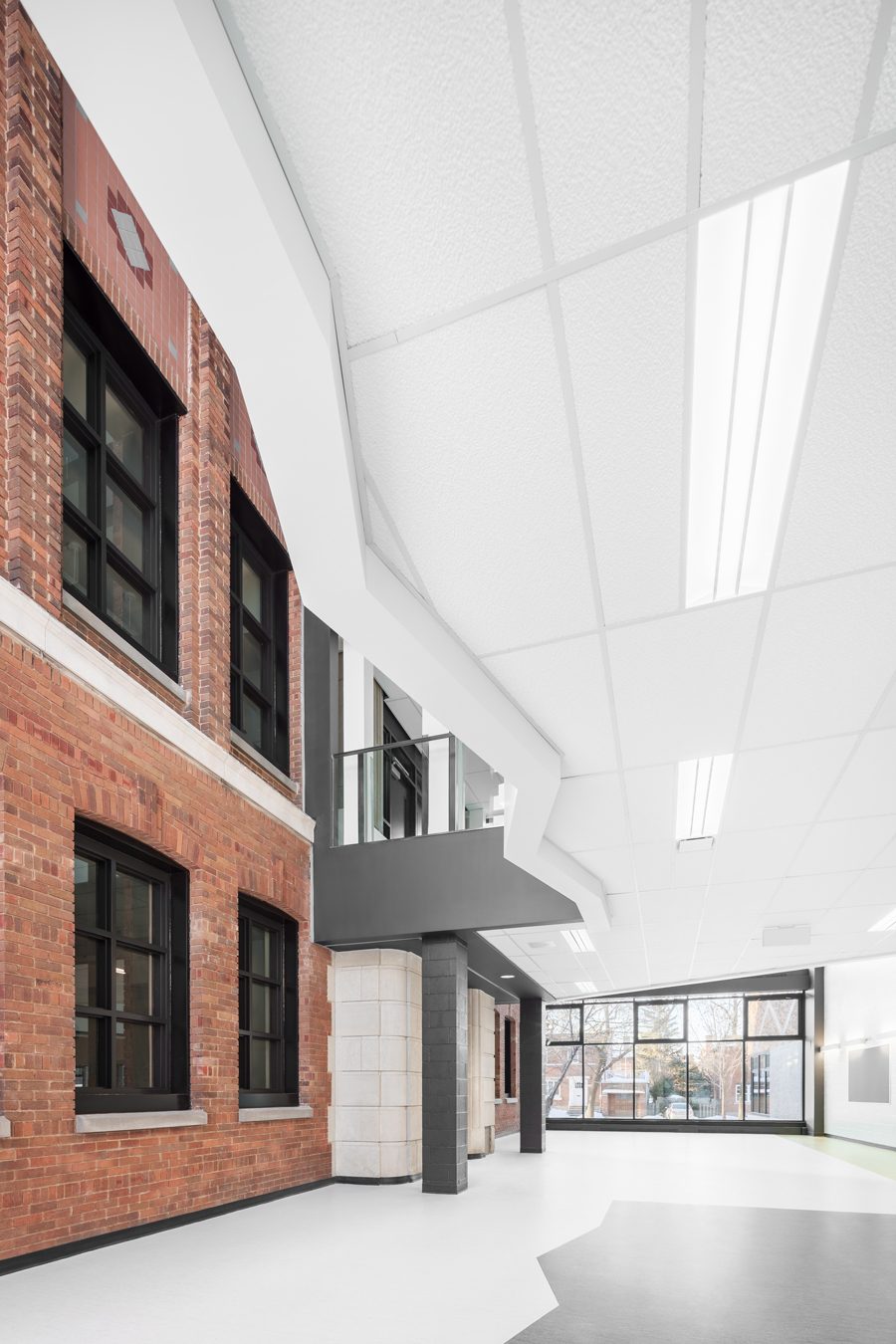
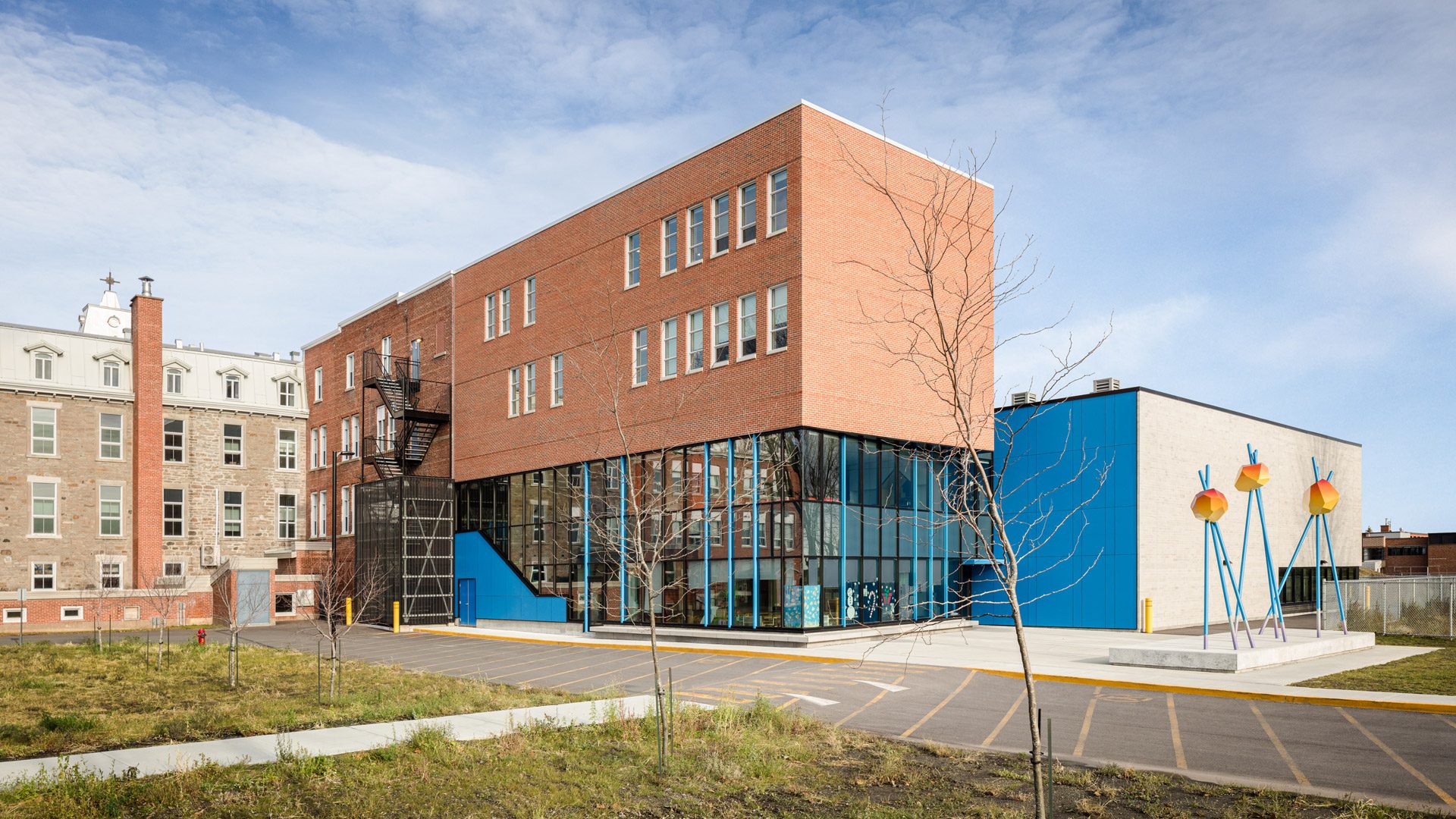
The new 2,853 m² wing was positioned along the longitudinal axis of the existing building — a decision shaped by the site's configuration, and one that also provided the most direct connection between the original school and the new addition. A three-storey, fully glazed atrium marks the transition between the two structures. One wall of the atrium is formed by a preserved original facade, lending warmth to the space — particularly in the multipurpose area at ground level.
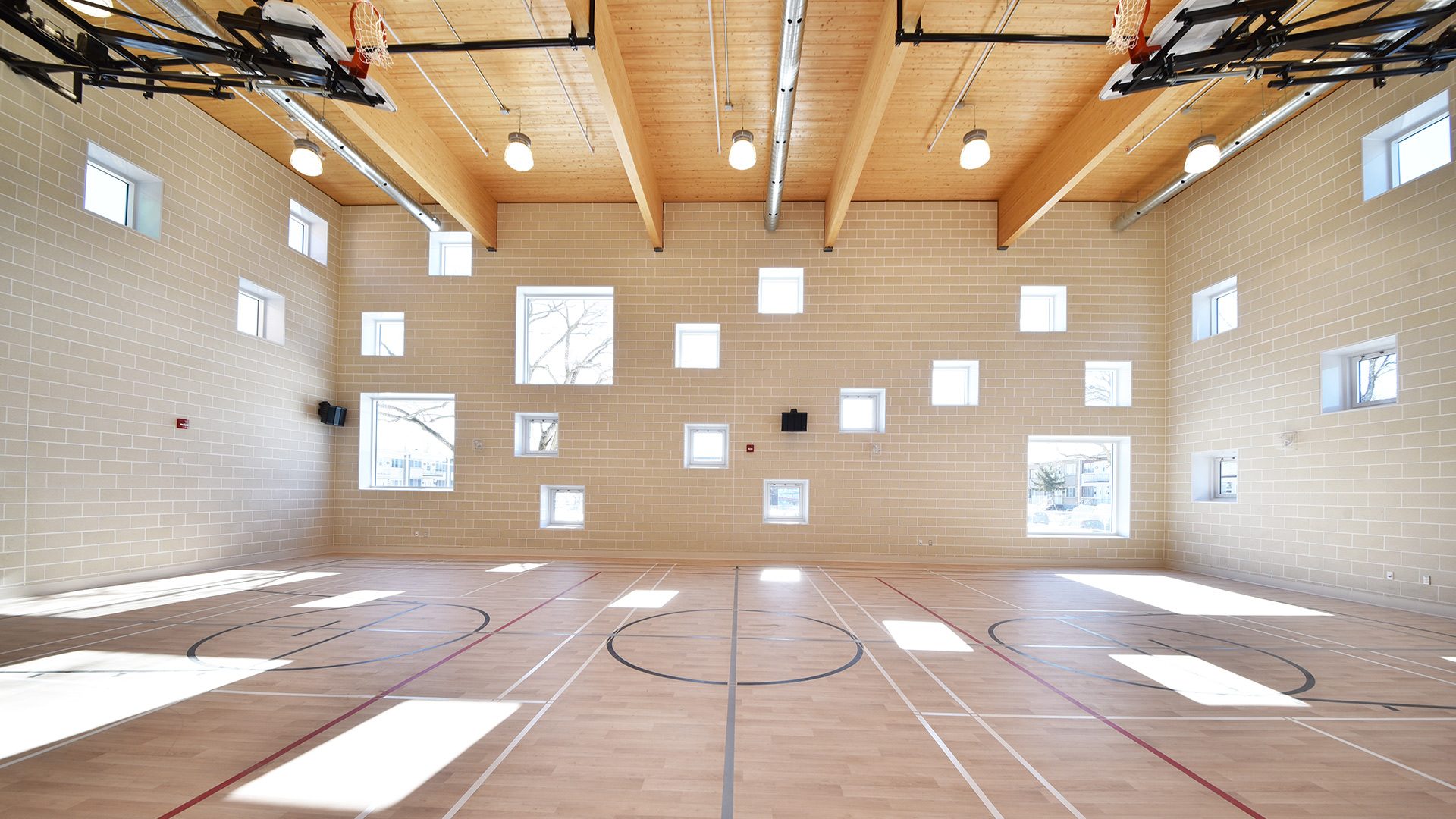
The exterior facades of the new wing are clad in brick whose tones echo those of the historic building. The crosshatch pattern of the original is reinterpreted across the gymnasium's exterior walls. The north facade of the addition unfolds in a gesture the designer described as a butterfly spreading its wings before taking flight. Windows placed in an intentionally irregular rhythm offer children unexpected vantage points onto the outside world.
The gymnasium volume, rising two storeys rather than three, steps back from the new wing, introducing variation to the west facade and providing shelter over the daycare entrance. Straddling the gymnasium roof, a slender metal trellis — designed to eventually serve as a living green screen — is set within a steel frame whose lines extend those of the historic building. The screen also functions as a brise-soleil, limiting solar heat gain while defining the access zones to the gymnasium rooftop.
The triple-height multipurpose hall offers a privileged view onto the preserved facade of the existing building.
Circulation between the new wing and the original building is seamless, as the design team ensured that all floor levels align precisely. The atmosphere shifts, however, the moment one enters the new spaces — animated by an abundance of natural light and punctuated by vibrant bursts of colour. Circulation areas are open and interconnected, designed to continually spark curiosity and wonder in the children who move through them.
An acid green covers one wall of the gymnasium and marks the presence of small built-in lockers along the corridors. It reappears further along, transforming a fire stair into a playful element that, as the lead architect noted, could just as easily have been a slide. On the upper floors, a volume clad in orange announces the corridor access point to the gymnasium roof.
2 853 m²
Asia Pacific Interior Design Awards for Elite, 2015 I Winner Silver Award
Grands Prix du Design, 2014 I Winner
Categories: Educational Institution